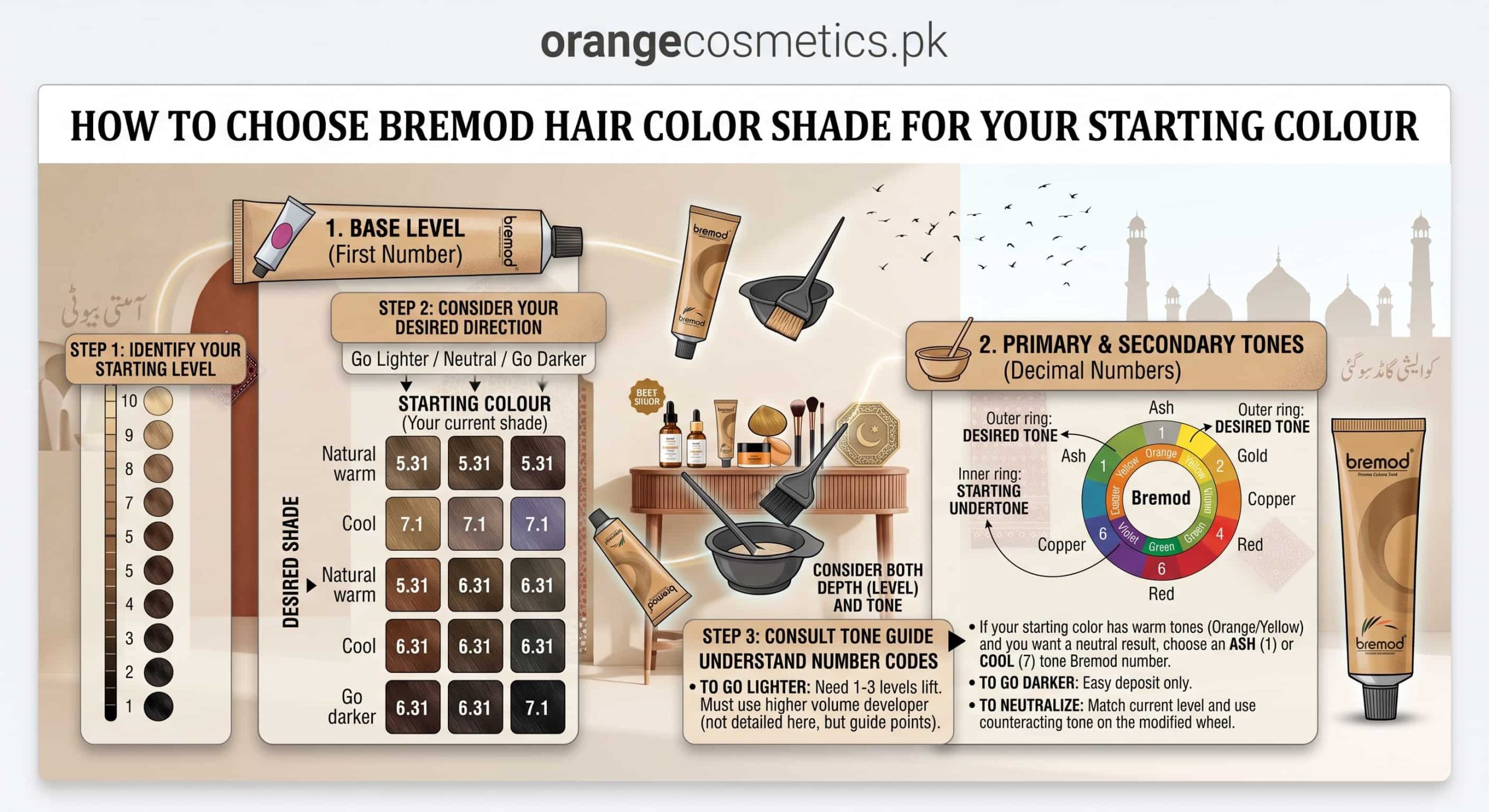
How to Choose Bremod Hair Color Shade for Your Starting Colour
To understand how to choose Bremod hair color shade, begin with your current hair rather than the colour shown on a model or digital swatch. Your natural colour, previous dye, grey percentage and hair condition all affect what a shade can realistically achieve.
The most suitable choice is not necessarily the shade you like most on the chart. It is the shade that can produce a reasonable result from your particular starting point.
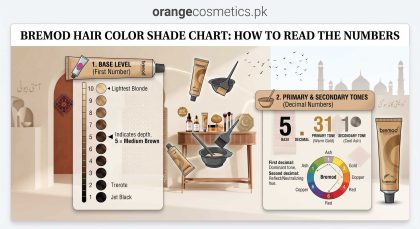
This guide helps you make that decision. If you need to understand what individual Bremod numbers mean, use our separate Bremod hair color shade chart. That guide explains the numbering system, while this article focuses exclusively on choosing a suitable shade.
Quick Starting-Colour Decision Table
Use this table to identify the most realistic direction before selecting a specific product.
| Your starting hair | Most achievable direction | More difficult direction |
|---|---|---|
| Natural black | Black, dark brown, rich brown or subtle warm reflection | Light brown, blonde, pale ash or bright fashion colour |
| Natural dark brown | Dark or medium brown, chestnut, coffee, burgundy or subtle copper | Light blonde or very cool ash |
| Natural medium brown | Natural brown, light brown, gold, coffee, copper or burgundy | Very light blonde without professional lightening |
| Natural light brown | Natural, ash, gold, copper or darker blonde | Very pale blonde or major colour correction |
| Natural dark blonde | Natural blonde, ash, gold or copper | Extremely pale results without additional processing |
| Light blonde or pre-lightened | Blonde tones and more visible fashion colours | Even results when the hair has inconsistent porosity |
| Grey mixed with natural hair | Blending or coverage close to the natural base | Uniform coverage using fashion tones without a coverage plan |
| Previously dyed dark | Maintain the existing depth or go darker | Becoming significantly lighter with another colour application |
| Bleached or highlighted | Controlled toning or adding depth | Predicting an even result without a strand test |
| Henna-treated hair | Professional assessment before further colouring | Applying chemical colour without confirming compatibility |
These directions are not guarantees. They help identify whether your intended change is subtle, moderate or likely to require professional work.
How to Choose Bremod Hair Color Shade in Five Decisions
Decision 1: Is your hair natural or previously coloured?
This is the most important distinction.
Natural hair and previously dyed hair do not necessarily respond in the same way to a new application.
Your hair is not one uniform starting colour if you have:
- Natural roots with dyed lengths
- Grey roots with coloured ends
- Highlights over a darker base
- Faded black or brown dye
- Bleached ends
- Several previous colours layered together
- Henna under permanent hair colour
Inspect your roots, middle sections and ends separately in daylight.
If the three areas look different before colouring, they may also look different afterwards. Choosing a single shade based only on the roots can produce darker, warmer or more intense ends.
Decision 2: Do you want a subtle, moderate or major change?
Place your goal into one of the following categories.
Subtle change
A subtle change keeps you close to your current colour.
Examples include:
- Black to dark brown
- Dark brown to medium brown
- Medium brown to light brown
- Light brown with a golden reflection
- Dark blonde with an ashier appearance
This is generally the most predictable option for home use.
Moderate change
A moderate change introduces a noticeable tonal difference without attempting a complete transformation.
Examples include:
- Brown to coffee
- Brown to burgundy
- Light brown to copper
- Dark blonde to golden blonde
- Medium brown to a warmer golden brown
The existing undertone will influence the result, so a strand test becomes more important.
Major change
A major change involves several levels of lightening, removing previous dark colour or creating a pale fashion result.
Examples include:
- Black to blonde
- Dyed dark brown to ash blonde
- Uneven hair to one light colour
- Black to vivid purple
- Henna-treated hair to a chemical fashion shade
- Bleached sections and dark roots to one uniform result
These goals often require more than selecting a lighter tube. They may involve lightening, correction, filling or different formulas for different sections.
Professional assistance is the safer option for a major transformation.
Which Bremod Direction Suits Natural Black Hair?
Natural black hair contains a deep starting pigment. Dark shades and rich reflections are generally more realistic than visibly light results.
Consider whether you want to:
Maintain a deep colour
A black or dark-brown shade can refresh depth without attempting a major transformation.
Create a softer brown appearance
A dark or medium brown may create a softer result, although the change can remain subtle on very dark hair.
Add a warm reflection
Chestnut, burgundy, damson or dark copper directions may become visible under sunlight or strong lighting.
Become noticeably lighter
A blonde or light-ash swatch should not be treated as a prediction for black hair. Selecting a high number does not ensure that the hair will reach the level shown on the chart.
If a clear light-brown, blonde or vivid result is required, consult a professional before purchasing the colour.
Which Bremod Direction Suits Dark-Brown Hair?
Dark-brown hair can support several rich colour directions without requiring an extreme change.
Suitable directions to compare include:
- Natural dark brown
- Medium brown
- Light brown
- Coco
- Coffee brown
- Chocolate brown
- Chestnut
- Burgundy
- Dark copper
Choose according to the desired visibility.
A dark or medium brown will keep the result controlled. Coffee, chocolate or coco can add warmth and richness. Burgundy or copper may produce a stronger reflection, particularly in daylight.
Moving from dark brown to light blonde remains a major change. It becomes even more difficult when the starting brown is artificial permanent colour rather than natural pigment.
Which Bremod Direction Suits Medium-Brown Hair?
Medium-brown hair provides greater flexibility because it is light enough to display several tonal directions while still supporting rich brown shades.
Possible goals include:
| Desired result | Direction to explore |
|---|---|
| Maintain the existing appearance | Natural medium brown |
| Create a softer result | Light brown |
| Add warmth | Golden brown, coffee or coco |
| Add a red direction | Chestnut, burgundy or mahogany |
| Add orange warmth | Copper |
| Reduce a golden appearance | A suitable ash direction after assessing the existing warmth |
| Move towards blonde | Professional assessment if several levels of lift are required |
Do not choose an ash shade simply because the current hair looks warm. The existing level and type of warmth determine which tonal correction is appropriate.
An unsuitable cool shade can appear dull or darker on porous hair without creating the intended result.
Which Bremod Direction Suits Light-Brown Hair?
Light-brown hair can show subtle tonal changes more visibly than dark hair.
You may consider:
- Natural light brown
- Dark blonde
- Ash dark blonde
- Golden dark blonde
- Coffee brown
- Golden brown
- Medium copper
- Light copper
The condition of the ends is important. Light-brown hair that has faded from previous colouring may absorb a shade differently from natural roots.
If the ends are lighter, drier or more porous, they may become darker or more intense than the rest of the hair.
Perform a strand test using hair that includes both the root area and the lengths where possible.
Which Bremod Direction Suits Dark-Blonde Hair?
A dark-blonde base can display natural, ash, golden and copper directions clearly.
Choose according to the intended finish:
- Natural blonde for a balanced result
- Ash blonde for a cooler direction
- Golden blonde for warmth
- Copper blonde for a more visible warm result
- A deeper brown when deliberately going darker
Examine the hair in daylight before choosing ash. Hair that appears neutral indoors may show yellow, orange or red warmth near a window.
Also consider previous highlights. Highlighted strands may process more strongly than the darker base.
Which Bremod Direction Suits Light or Pre-Lightened Hair?
Light and pre-lightened hair can show the selected tone strongly, but it may also be less predictable because of porosity.
Common concerns include:
- Ends taking too much pigment
- Ash tones becoming overly strong
- Fashion colours appearing brighter than expected
- Previously bleached sections turning darker than natural sections
- Uneven fading
- Different results across roots and highlights
Do not select a shade only because light hair can display it clearly. First decide whether the goal is:
- Toning unwanted warmth
- Adding a golden reflection
- Returning to a natural-looking blonde
- Adding brown depth
- Applying copper, red or purple
- Blending several different lightened sections
Adding significant depth to pale hair may require more planning than simply applying a dark shade. Professional guidance can help prevent a flat, muddy or unexpected result.
How Should Grey Hair Affect Your Choice?
Grey hair changes the decision because coverage and tonal preference are separate questions.
Determine:
- The approximate percentage of grey
- Whether it is concentrated around the temples
- Whether individual grey strands are resistant
- The natural colour of the non-grey hair
- Whether you want complete coverage or softer blending
- Whether the lengths contain previous colour
- Whether past colours covered the grey successfully
If your priority is a natural-looking result, begin by considering shades close to the non-grey base.
If you prefer a golden, ash, red or copper result, confirm whether that shade is intended to provide the required grey coverage. Fashion and tonal shades should not automatically be assumed to cover resistant grey by themselves.
Follow Bremod’s instructions or seek a professional formula rather than inventing a mixing ratio.
What If Your Roots and Ends Are Different Colours?
Uneven starting colours require more caution.
Examples include:
- Black roots with brown ends
- Grey roots with dark lengths
- Dark roots with blonde highlights
- Brown roots with faded copper ends
- Natural roots with previously dyed black lengths
Applying the same product for the same length of time across every section may produce uneven results.
Before application, ask:
- Which section is darkest?
- Which section is most porous?
- Which section contains artificial pigment?
- Which section needs coverage?
- Which section is already close to the desired result?
If different sections require different corrections, home application may not be appropriate.
Should You Choose Warm or Cool?
Warm and cool are preferences, not strict rules based on complexion.
Consider a warmer direction if you prefer:
- Golden brown
- Honey or caramel effects
- Copper
- Chestnut
- Coffee or chocolate
- Burgundy
- A brighter, richer reflection
Consider a cooler direction if you prefer:
- Ash blonde
- A more muted finish
- Less visible gold
- A cooler brown or blonde effect
Your starting warmth remains important. A cool color cannot always neutralise every unwanted tone, particularly when the hair is too dark or contains multiple layers of previous colour.
Choose according to the result you enjoy, the maintenance you accept and what is achievable from the current base.
The Three-Question Bremod Selection Test
Before ordering, answer these questions.
1. Is the shade close to my existing depth?
If yes, the outcome may be more predictable.
If no, determine whether you are going darker or trying to become substantially lighter.
2. Is my hair natural and evenly coloured?
If yes, one formula may behave more consistently.
If no, roots, lengths and ends may require different treatment.
3. Is the intended result realistic without correction or lightening?
If yes, proceed to the allergy and strand-testing stage.
If no or uncertain, obtain professional advice before applying the product.
A Simple Decision Score
Give yourself one point for every statement that applies:
- My roots and ends are different colours.
- My hair contains previous permanent dye.
- I want to become more than slightly lighter.
- I have bleached or highlighted sections.
- I have used henna.
- My hair feels damaged or highly porous.
- I need resistant grey coverage.
- I want a pale ash or vivid fashion result.
- I have experienced an unexpected colour result before.
- I cannot identify my current starting colour.
Score interpretation
| Score | Recommended approach |
|---|---|
| 0 to 1 | A shade close to the current depth may be manageable with the product instructions and required tests |
| 2 to 3 | Use additional caution, perform a strand test and consider professional advice |
| 4 or more | Obtain a professional colour assessment before attempting the change |
This score measures complexity, not whether someone is capable of applying hair colour. Even experienced users can receive unpredictable results when several complicating factors are present.
Strand Test and Allergy Test Are Different
An allergy test helps assess whether the product may cause a skin reaction. A strand test helps preview the visual result on a small section of hair.
You may need both.
An allergy test helps assess:
- Redness
- Itching
- Swelling
- Irritation
- Other signs of sensitivity
A strand test helps assess:
- Whether the shade is visible
- Whether it becomes too dark
- Whether warmth remains
- Whether porous hair absorbs too much colour
- Whether previously dyed sections respond differently
- Whether the processing result matches your expectations
The FDA advises performing a skin test before every hair-dye application, following the product directions, wearing gloves and avoiding use on an irritated or damaged scalp. Read the FDA hair-dye safety guidance.
Follow the instructions supplied with the exact product rather than substituting a testing or application method from another brand.
Mistakes to Avoid When Choosing a Bremod Shade
Choosing from the model photograph
The model’s starting colour, lighting and image editing may differ from your situation.
Assuming a lighter shade will remove dark dye
Previously applied dark permanent colour may remain in the hair even when a lighter shade is applied.
Ignoring the difference between roots and ends
Natural roots and dyed lengths can develop differently.
Selecting ash without identifying the existing warmth
Ash is not one universal solution for every red, orange or yellow result.
Using someone else’s developer choice
The correct product system depends on the shade, starting level, hair condition and intended change. Follow Bremod’s directions or professional advice.
Skipping the strand test
The strand test is the most practical preview of how your own hair may respond.
Using a fashion shade for grey without checking coverage
A vivid shade may provide tone without delivering the uniform grey coverage expected.
Applying colour to damaged or irritated hair
Do not colour an irritated scalp. Seek professional advice when the hair is severely damaged or has undergone several chemical treatments.
Your Final Bremod Selection Checklist
Before purchasing, confirm:
- My natural root colour
- The colour of my mid-lengths
- The colour and condition of my ends
- Whether my hair contains previous dye
- Whether henna, bleach, rebonding or another treatment has been used
- My approximate grey percentage
- Whether I want a subtle, moderate or major change
- Whether I prefer warm, cool or natural tones
- Whether the result is realistic from my starting point
- The complete shade name and product instructions
- The required allergy-test procedure
- My plan for a strand test
- Whether professional help is advisable
Final Answer
How to choose Bremod hair color shade depends first on the condition and colour already present in your hair.
Start with the following rule:
- Stay close to your existing depth for a more predictable change.
- Choose a tonal family when you want warmth, coolness or a richer reflection.
- Treat previously dyed, grey, highlighted and bleached hair as more complex starting points.
- Do not expect a light shade to create a pale result over dark or previously coloured hair automatically.
- Use professional help when the desired result requires major lightening or correction.
Once you know which direction is realistic, use the separate Bremod shade-chart guide to interpret the available product codes.
You can then compare the current Bremod hair colour range or explore other original beauty and hair-care products from Orange Cosmetics.