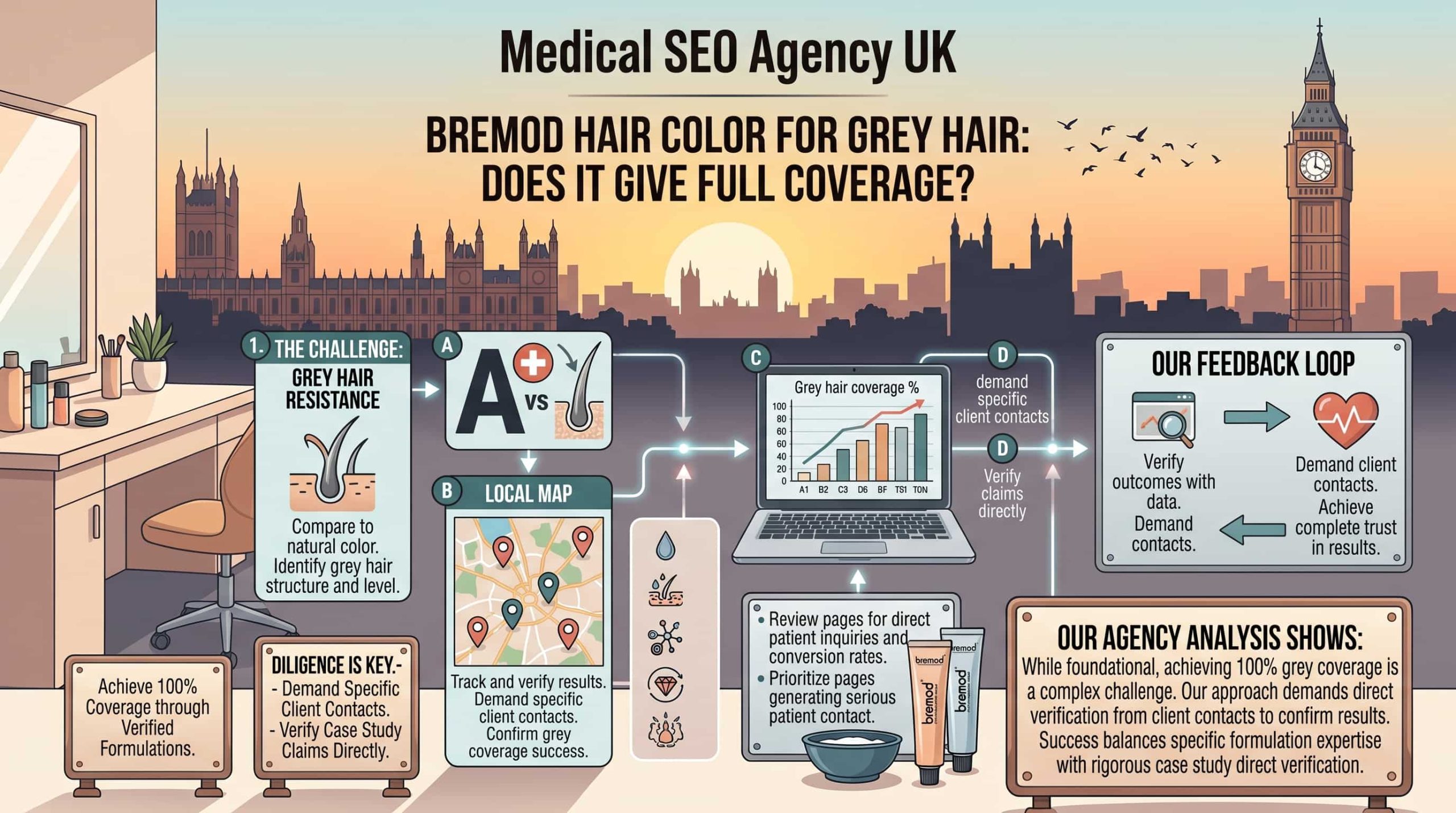
Can Bremod Hair Color Cover Grey Hair?
Bremod hair color can cover grey hair when an appropriate permanent shade, developer and application method are used. Natural shades such as those marked with N are generally the most suitable starting point because they contain balanced pigments intended to produce natural-looking coverage.
The result will still depend on how much grey hair is present, whether it is fine or resistant, the selected colour level, developer strength, application and processing time.
Someone with a small amount of soft grey hair may achieve even coverage using the desired shade alone. Coarse or predominantly white hair may require a natural-base shade, careful saturation and a formula selected specifically for resistant grey coverage.
Direct Answer
For Bremod grey-hair coverage:
- Choose a permanent shade close to your natural or desired level
- Give preference to natural-base shades marked
Nwhere suitable - Use the developer specified for the particular shade
- Twenty volume developer is commonly used for permanent grey coverage
- Apply first to the areas with the most resistant grey
- Ensure every grey strand is fully saturated
- Follow the complete processing time stated on the packaging
- Perform an allergy alert test and strand test before colouring
Bremod describes its 7N Blond as a natural blonde colour offering grey coverage and a natural finish. This supports the use of natural-series shades for coverage, but no single shade will suit every starting colour. Bremod 7N product information
Why Is Grey Hair Sometimes Difficult to Cover?
Grey hair has lost some or all of its natural pigment. The strands may also behave differently from the remaining pigmented hair.
Some grey hair is:
- Fine and receptive to colour
- Coarse and resistant
- Concentrated around the temples or hairline
- Distributed evenly throughout the hair
- Mixed with previously coloured lengths
- Completely white
- More porous at the ends
- Difficult to saturate
Resistant grey hair may have a compact cuticle that makes colour penetration less predictable. This can cause the final result to appear:
- Lighter than expected
- More transparent
- Uneven
- Warmer or cooler than intended
- Well covered in some areas but visible in others
- Quick to fade
Increasing developer strength is not always the correct solution. Shade selection, natural-base pigment, saturation and processing time can matter more.
Which Bremod Shades Are Best for Grey Hair?
Natural shades are normally the most dependable starting point for grey coverage.
On many professional shade systems, N identifies a natural or neutral shade. These shades are designed to provide a balanced colour result without leaning too strongly towards ash, gold, copper or red.
For example:
3.0generally represents a dark natural brown4.0generally represents a medium natural brown5.0generally represents a light natural brown6.0generally represents a dark natural blonde7Nrepresents a natural blonde within Bremod’s range8.0generally represents a light natural blonde
Names and numbering should always be confirmed against the current Bremod packaging or shade chart.
Natural shades can provide the base pigment needed to make grey coverage look more solid. Fashion or tonal shades may produce attractive reflections but can appear less opaque when used alone on a high percentage of white hair.
Browse the current range of original Bremod hair color shades in Pakistan to compare available natural, ash, gold, copper and mocha options.
Can You Use an Ash, Gold or Copper Shade on Grey Hair?
A tonal shade may cover grey hair, but the final result depends on the formula and the percentage of grey.
Examples include:
- Ash shades for reducing excessive warmth
- Gold shades for a warmer result
- Copper shades for a stronger orange-red reflection
- Mocha shades for a balanced warm brown
- Red shades for a more noticeable fashion result
When grey hair forms a substantial part of the head, a tonal shade used alone may appear brighter, more translucent or less balanced on the white strands.
Professional colourists may combine a natural-base shade with the desired tonal shade at the same level. This can provide natural pigment for coverage while retaining some of the intended reflection.
However, the correct ratio is product-dependent. Do not invent a mixing formula or assume that ratios used with another brand apply to Bremod. Follow the manufacturer’s directions or ask an experienced colourist.
How Does the Percentage of Grey Affect Shade Selection?
The amount of grey can change how the chosen shade develops.
Less than approximately 25% grey
A person with scattered greys may be able to use the desired permanent shade without making major changes to the formula.
Coverage can still vary around resistant areas such as the temples.
Approximately 25–50% grey
A natural-base shade becomes increasingly useful, particularly when an opaque and even result is required.
The desired tonal shade may need to be balanced with a corresponding natural shade.
Approximately 50–75% grey
Natural-base pigment usually becomes more important. Fashion shades used alone may appear too bright or transparent on the white hair.
Careful saturation and full processing time also become essential.
More than approximately 75% grey
Predominantly white hair may show the chosen tone very clearly. A shade that appears subtle on pigmented hair can look brighter or warmer on white strands.
Professional formulation is advisable when the desired result involves strong tonal control, lightening or a substantial change from the existing colour.
These percentages are general planning ranges rather than confirmed Bremod formulas. The product instructions and a strand test should determine the final application.
What Developer Should You Use for Grey Coverage?
Twenty volume developer is commonly selected with permanent hair colour for grey coverage.
It usually provides enough oxidation to develop permanent pigment and support coverage without the stronger lifting action associated with 30 or 40 volume.
However, the correct developer must be confirmed from the instructions supplied with the particular Bremod product.
Why not automatically use 30 volume?
Thirty volume provides stronger lift. It may lighten the remaining naturally pigmented hair more than required while failing to solve an underlying shade-selection or saturation problem.
This can create:
- Lighter roots
- Excessive warmth
- Increased dryness
- A mismatch between grey and non-grey hair
- Less depth than expected
Why not automatically use 10 volume?
Ten volume primarily supports colour deposit with minimal lift. It may work with some formulas and darkening applications, but it may not provide the intended development or resistant-grey coverage for every permanent colour system.
Should you use 40 volume?
Forty volume is not a normal solution for covering grey hair. It is a high-strength developer used for specialised lifting applications and carries a greater risk of irritation, dryness and damage.
For a detailed comparison, read our guide to choosing the correct Bremod hair color developer volume.
Should You Choose a Shade Lighter or Darker?
Grey hair can sometimes make the final result appear lighter because it contains little natural pigment.
However, choosing a significantly darker shade can create an unnatural result or make future regrowth more obvious.
A sensible starting point is usually:
- The same level as the naturally pigmented hair
- A level close to the desired result
- A natural shade capable of providing suitable coverage
If you are uncertain between two shades, a strand test provides better evidence than the colour printed on the box or displayed on a screen.
Our guide on how to choose a Bremod hair color shade explains how to compare your current level with your intended result.
How to Apply Bremod Hair Color to Grey Roots
Always follow the instructions supplied with the product. The following steps explain the general considerations involved in a root application.
1. Complete an allergy alert test
Perform the test according to the timeframe and method stated on the packaging before every application.
A previous successful use does not guarantee that a reaction cannot occur later.
2. Perform a strand test
Test the intended shade and developer on a small concealed section.
This can help reveal:
- Coverage
- Final depth
- Tone
- Processing behaviour
- Hair condition
- Whether resistant greys remain visible
3. Divide the hair into sections
Clean sections make it easier to reach the roots and fully coat resistant areas.
Commonly resistant areas include:
- Temples
- Front hairline
- Parting
- Crown
- Areas containing concentrated white hair
4. Begin with the resistant areas
Apply the mixture to the most resistant grey sections first if this is consistent with the product instructions.
These areas may benefit from the maximum permitted processing time.
5. Apply enough product
Grey strands need complete saturation. Spreading a small amount of colour too thinly can leave parts of the hair uncovered.
Do not try to make one tube cover more hair than recommended.
6. Follow the stated processing time
Do not shorten the processing time because the colour looks dark while developing.
Likewise, do not leave it on longer than instructed in an attempt to force additional coverage.
7. Rinse according to the instructions
Wear gloves and rinse thoroughly while keeping the colour away from the eyes.
Follow any after-colour washing or conditioning directions supplied with the product.
Should You Colour the Roots and Lengths Together?
Repeatedly applying permanent colour and developer over the full length can cause:
- Dark colour build-up
- Dryness
- Loss of shine
- Uneven porosity
- Ends becoming darker than the roots
- Increased breakage
If only the new roots are grey, the permanent mixture may need to be concentrated on the regrowth rather than repeatedly applied to already coloured lengths.
The lengths may require a shorter refresh or a separate colour method, depending on fading and hair condition.
Do not pull strong permanent colour through damaged or porous ends without determining whether it is necessary.
Why Did Bremod Not Cover the Grey Hair?
Poor coverage can have several causes.
The chosen shade lacked natural-base pigment
A fashion shade may produce tone without enough balanced pigment for opaque coverage.
The wrong developer was used
Developer that is too weak, too strong or incompatible with the formula can affect development and coverage.
The grey areas were not fully saturated
Resistant white strands need adequate product. Thin or rushed application can leave gaps.
The colour was removed too early
Permanent colour requires the processing time specified by the manufacturer.
The hair contained product build-up
Heavy oils, silicones, styling products or mineral deposits may contribute to uneven colouring.
Do not aggressively scrub or scratch the scalp immediately before colouring.
The hair was highly resistant
Some coarse grey hair requires professional formulation and application adjustments.
The shade was too light
Very light shades may produce a more translucent result than a natural shade closer to the existing base.
There was insufficient product
Long or thick hair may require more than one tube for complete saturation.
How Can You Make Grey Coverage Look Natural?
Natural-looking coverage does not always mean making every strand one flat colour.
Consider:
- Selecting a shade close to the natural base
- Using an appropriate natural-series shade
- Avoiding an unnecessarily dark result
- Maintaining some tonal variation
- Checking how the shade appears on white strands
- Considering how visible the regrowth line will be
- Choosing a manageable maintenance schedule
Someone with predominantly white hair may prefer blending rather than completely disguising every grey strand. This can create softer regrowth and reduce the contrast between colouring sessions.
How Often Will Grey Roots Need Recolouring?
The appropriate interval depends on:
- Hair-growth rate
- Contrast between the chosen colour and grey roots
- Percentage of grey
- Location of the grey hair
- Personal preference
- Hair condition
- Product instructions
A dark colour applied over white hair creates a more visible regrowth line than a lighter shade close to the grey.
Avoid repeatedly overlapping permanent colour onto previously coloured lengths simply because the roots need attention.
Grey Coverage and Previously Coloured Hair
The roots and lengths may require different decisions.
For example:
- New roots may contain natural dark hair and grey hair
- Mid-lengths may contain previous permanent colour
- Ends may be faded and porous
Using one formula across all three areas can produce different results.
A professional colourist may adjust the application method or timing to avoid:
- Light roots
- Dark bands
- Overloaded ends
- Uneven tone
- Additional damage
Corrective colouring is particularly advisable when the existing colour is very dark, patchy or produced by henna.
Important Hair-Colour Safety Precautions
Hair dye can cause allergic reactions and irritation. Follow every warning included with the product.
General precautions include:
- Perform the required patch test before every application
- Wear gloves
- Do not colour an irritated, sunburned or damaged scalp
- Keep the product away from the eyes
- Never use scalp hair colour on eyebrows or eyelashes
- Do not exceed the processing time
- Rinse the scalp thoroughly
- Keep hair colour away from children
- Review the ingredients if you have reacted previously
- Stop immediately if a serious reaction occurs
The FDA recommends performing a skin test before every hair-dye application, following label instructions, wearing gloves and keeping hair dye away from the eyes. FDA hair-dye safety guidance
Frequently Asked Questions
Does Bremod cover completely white hair?
Bremod permanent shades may cover white hair when the correct natural-base shade, developer and application are used. Completely white or resistant hair may require professional formulation and a strand test.
Which Bremod colour is best for grey hair?
A natural-series shade close to the desired level is usually the safest starting point. Bremod specifically describes its 7N Blond as providing grey coverage, but a blonde shade will not suit every desired result.
Is Bremod 7N suitable for grey hair?
Bremod identifies 7N as a natural blonde shade with grey-coverage capability. The final result will depend on the starting colour, grey percentage, developer and application.
Is 20 volume developer good for grey coverage?
Twenty volume is commonly used with permanent colour for grey coverage. Confirm the required strength from the instructions provided with the specific Bremod shade.
Can I cover grey hair with an ash shade?
An ash shade may provide coverage, but a high percentage of grey may require natural-base pigment as well. An ash shade used alone can look translucent or overly cool on white hair.
Can I mix a natural and fashion shade?
Professional colourists sometimes combine corresponding natural and tonal shades. The correct ratio depends on the colour system and amount of grey, so follow Bremod’s directions or obtain professional advice.
Why are my temples still grey after colouring?
Hair around the temples can be resistant. Possible causes include insufficient saturation, early removal, unsuitable shade selection or an inappropriate developer.
Will 30 volume cover grey hair better than 20 volume?
Not necessarily. Thirty volume creates more lift, but stronger lift does not automatically produce more opaque grey coverage. Twenty volume is more commonly used for standard permanent coverage.
Can I use black Bremod colour to cover every grey?
Black may cover greys, but it can produce a strong regrowth line and may be difficult to lighten later. Choose it only if black is genuinely the desired long-term result.
Where to Buy Bremod Hair Color in Pakistan
Orange Cosmetics stocks multiple Bremod shades, including natural browns, blondes, ash tones, golds, coppers and mocha colours.
Check the current Bremod hair color price in Pakistan and compare the available shades before selecting a colour for grey coverage.
Use the product grid for current stock and pricing because availability can change.
Final Answer
Bremod hair color can cover grey hair, but coverage depends on more than the brand name.
The most important factors are:
- An appropriate permanent shade
- Sufficient natural-base pigment
- The correct developer
- Complete saturation
- Full processing time
- Grey percentage
- Hair resistance
- Previous colour
- Hair condition
Natural shades are generally a stronger starting point for grey coverage than fashion shades used alone. Twenty volume developer is commonly selected, but the exact formula should follow the instructions for the specific Bremod product.
Always perform the required allergy and strand tests. If the hair is predominantly white, highly resistant, damaged or unevenly coloured, professional formulation is more reliable than simply increasing the developer strength.